This post is also available in:
 English
  Faroese (Faroe Islands)
Although the Faroe Islands moved away from electoral constituencies nearly 20 years ago, they still appear to persist in voter behaviour. This behaviour may also influence gender equality.
It is often argued, particularly by older politicians, that the Faroe Islands should return to the former constituency system, so that different regions are guaranteed representation in parliament.
When the system of seven constituencies was abolished and the country became a single nationwide constituency, this led to a clear change: women’s representation improved significantly. This indicates that the electoral system itself influenced who gained representation.
However, this development now appears to have stalled, and women’s representation remains lower than in neighbouring countries. This raises the question of whether the constituency system has truly been left behind, or whether it continues to exist as an informal pattern in voter behaviour.
The 2026 parliamentary election – recalculated by constituency
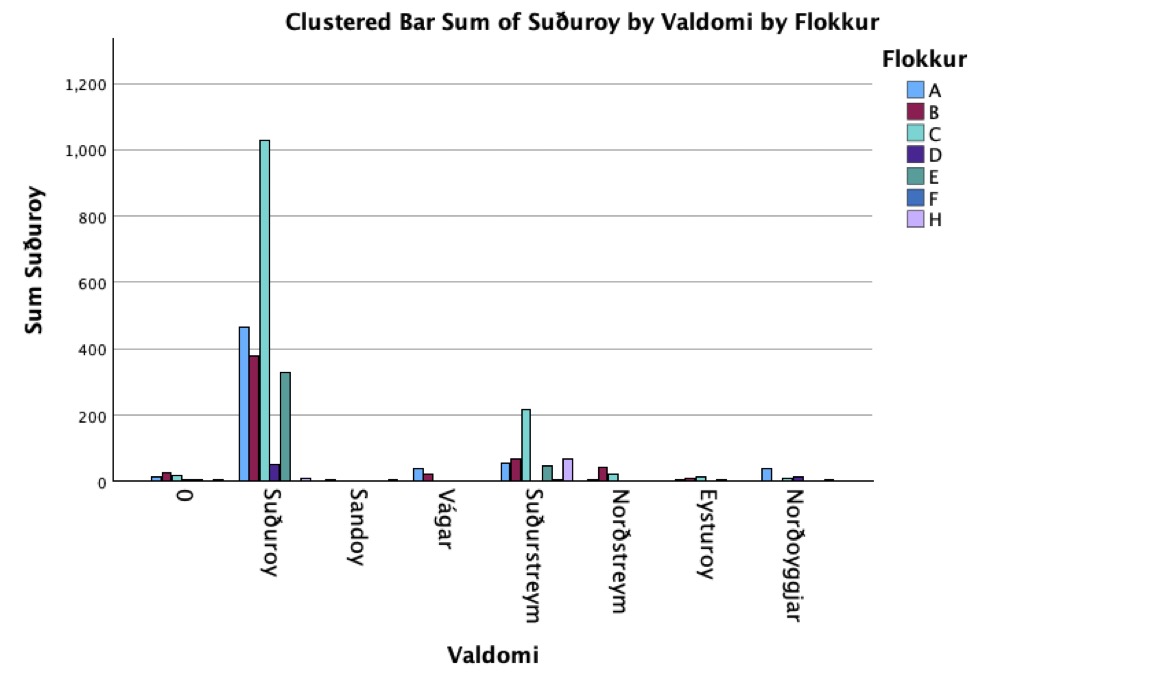
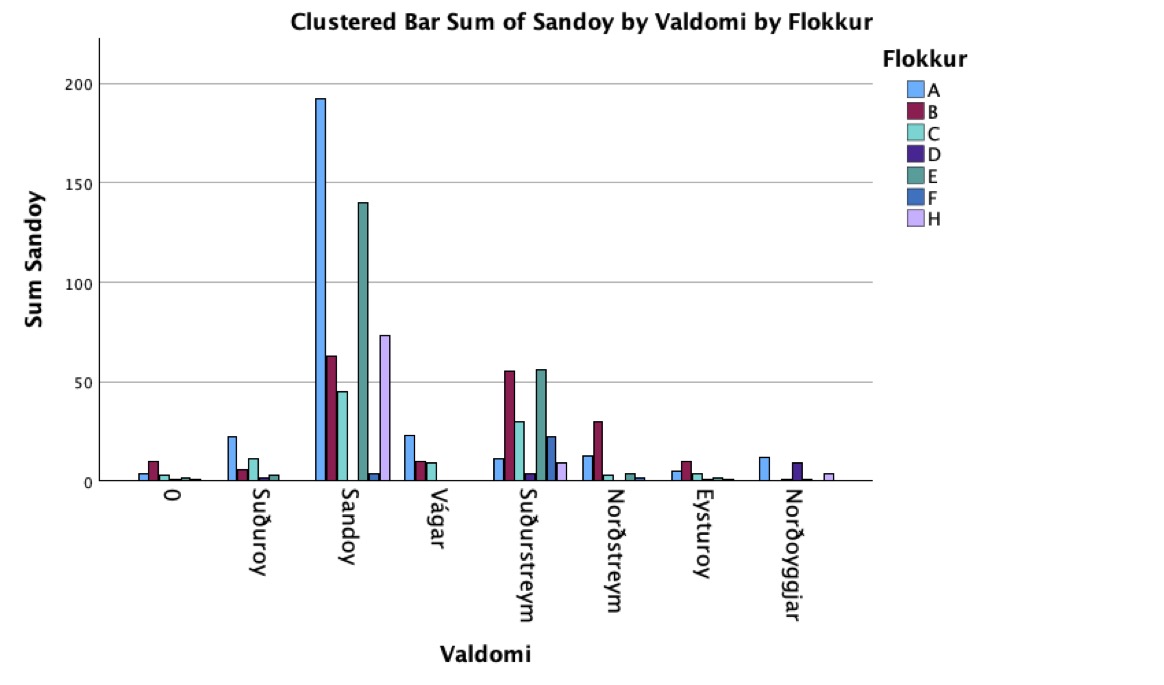
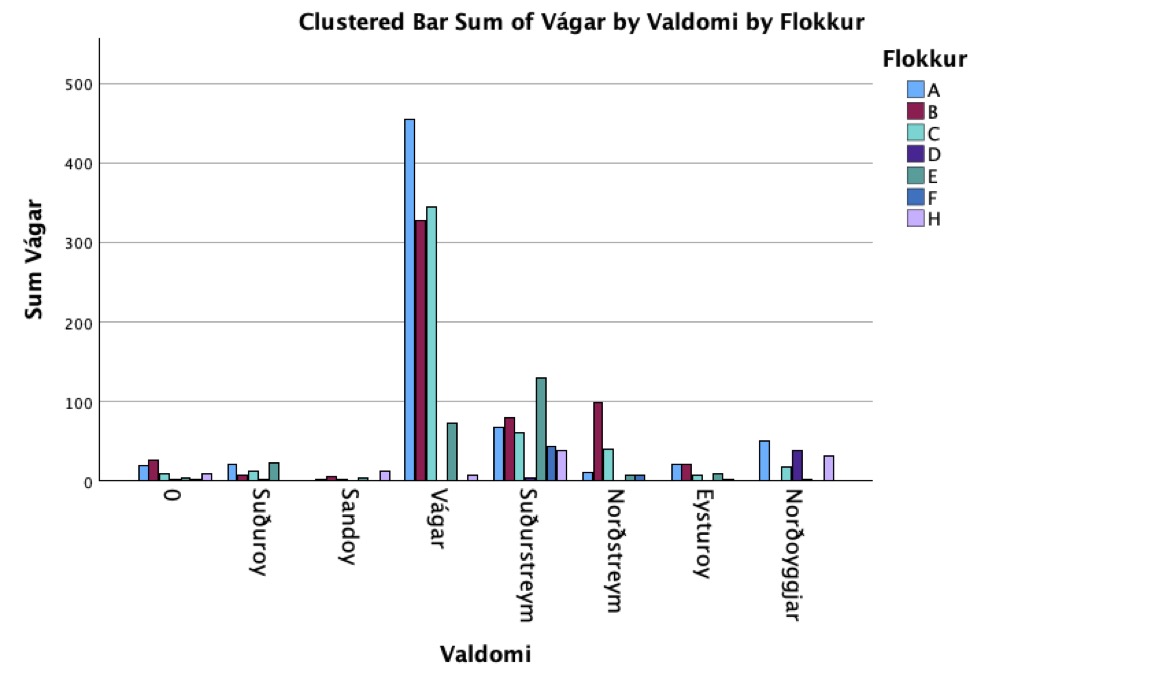
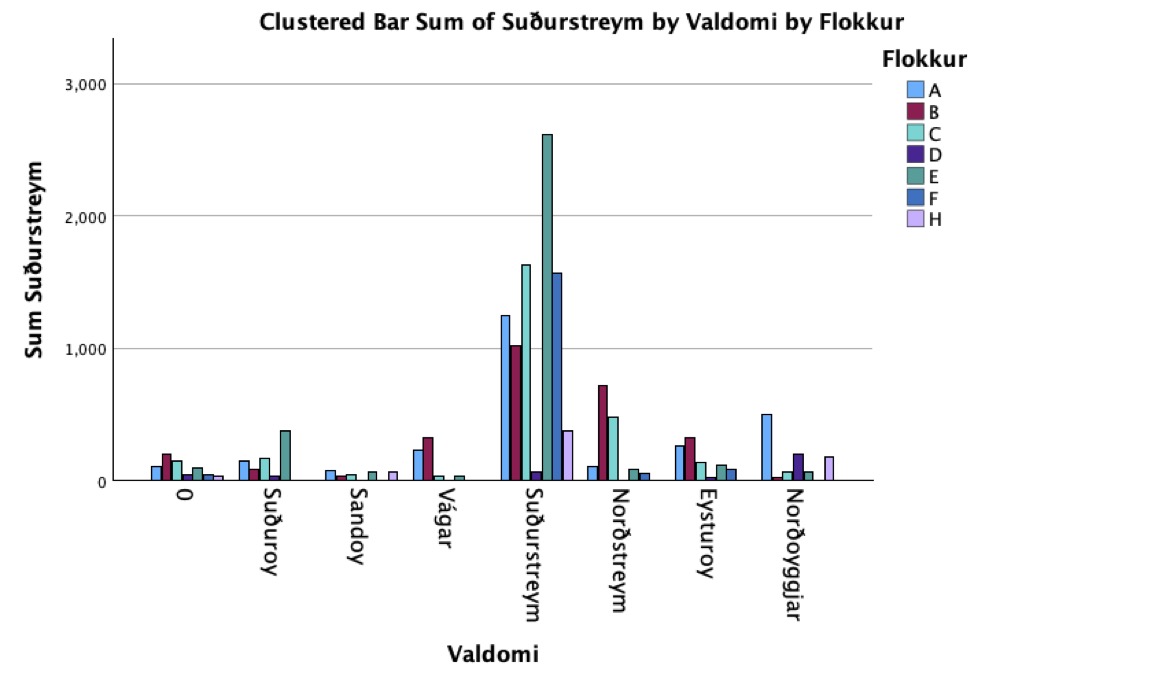
A rough recalculation of the results from the 2026 parliamentary election, in which candidates are grouped according to their place of residence, provides an indication of this pattern. The calculation should be treated with caution, as it has been necessary in some cases to estimate candidates’ place of residence. Nevertheless, it offers an informative picture.
The figures in the table below show that all constituencies are represented—except Sandoy, which may still gain representation through substitute members.
The distribution of votes across constituencies is presented in the table below. While the constituency system was in place, it was often argued that the distribution of parliamentary seats was not equitable. For example, Suðurstreymoy had only eight representatives, which did not correspond to its share of voters. Since then, the population distribution across regions has changed significantly. This is reflected in the fact that Suðurstreymoy now constitutes such a large share of the electorate that, under a strictly proportional allocation, it would be entitled to around 14 parliamentary seats.
| Constituency | % of votes | Seats (recalculated) | Elected members by candidates’ place of residence |
| Suðuroy | 9% | 3 | 5 |
| Sandoy | 3% | 1 | 0 |
| Vágar | 6% | 2 | 3 |
| Suðurstreymoy | 41% | 14 | 12 |
| Norðstreymoy | 7% | 2 | 3 |
| Eysturoy | 22% | 7 | 5 |
| Norðoyggjar | 12% | 4 | 5 |
The table shows that if the Faroe Islands were to return to the former constituency system, a new allocation of parliamentary seats would be necessary to ensure equal value of votes.
Comparing this with the current distribution, we see that several regions are overrepresented—such as Suðuroy, Vágar, Norðstreymoy and Norðoyggjar—while Sandoy, Suðurstreymoy and Eysturoy are underrepresented. However, this pattern is not unlike the distribution observed under the former constituency system.
This suggests that although the constituency system has formally been abolished, it continues to operate as an informal structure in voter behaviour.
Do voters still vote locally?
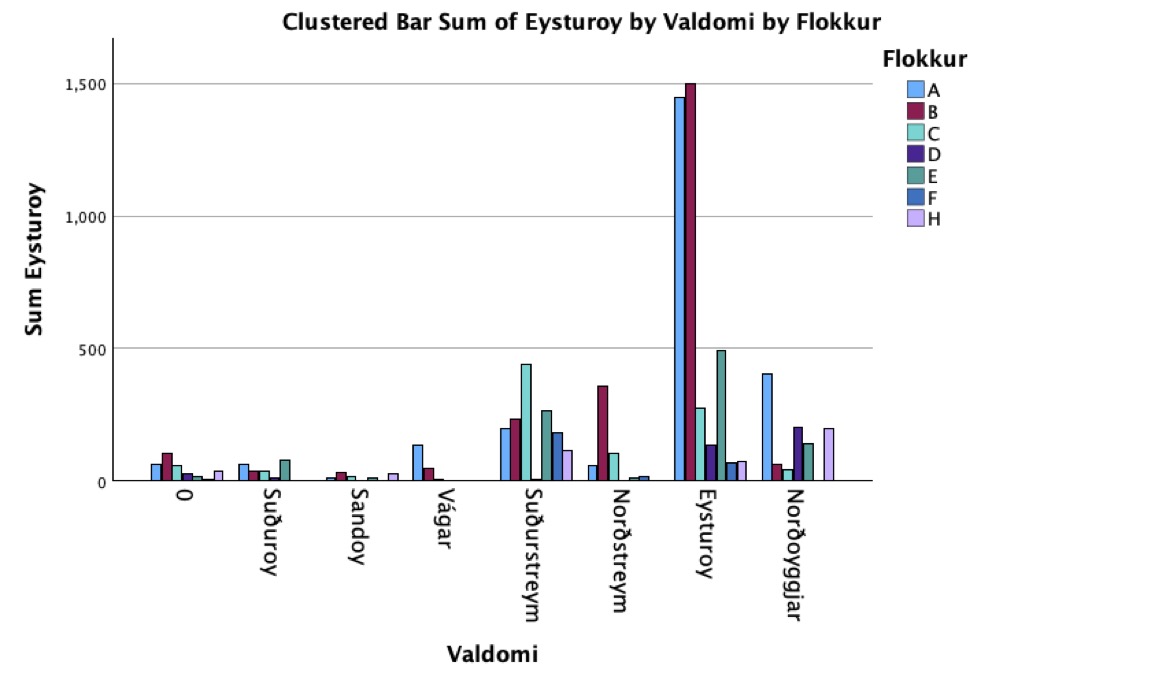
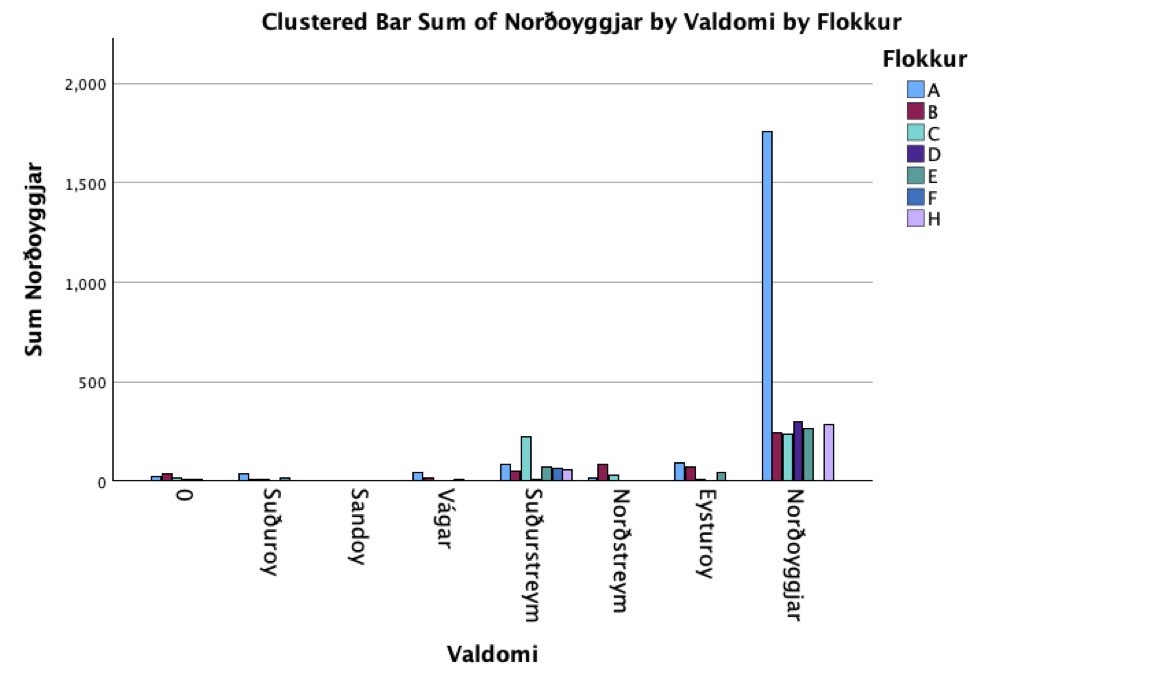
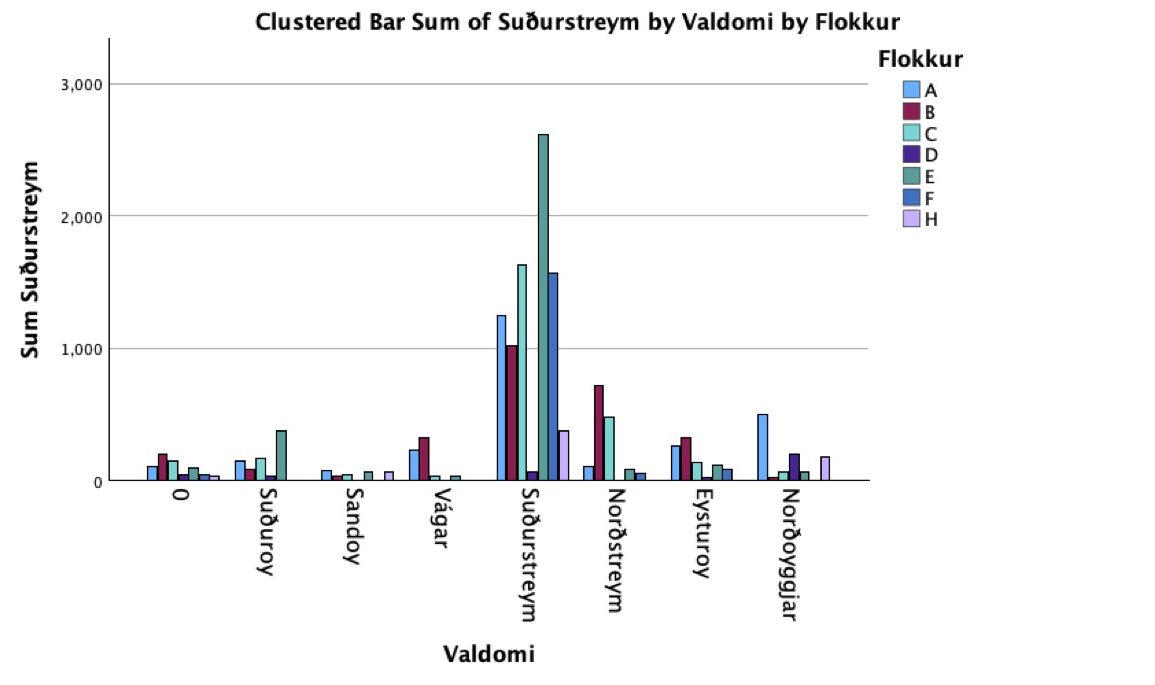
One of the main purposes of introducing a single nationwide constituency was to give voters the freedom to choose representatives from across the country. However, the data indicate that this freedom is only used to a limited extent.
Analyses show that voters to a large degree choose candidates from their own region. When voters concentrate their support, it is often around a single candidate who receives a substantial share of the votes in that area. Examples include candidates such as Helgi Abrahamsen, Atli F. Johansen, and Bjarni Hammer, all of whom have received a large proportion of their votes from a single region.
In other words, formally the country constitutes a single constituency—but in practice, several smaller, invisible constituencies still appear to shape voting behaviour.
Gender equality – not just a matter of nomination
As discussed in a related analysis, this pattern of voter behaviour also has direct implications for gender equality. The election results show that women receive fewer votes on average than men. Women received an average of 186 votes, while men received 226. As a result, more men are elected: 23% of male candidates were elected, compared to 16% of female candidates.
In most parties, men receive more votes than women, though not in all. In Framsókn and Tjóðveldi, women receive more votes on average than men. It is noteworthy that these parties also perform better in the capital region, suggesting that women may have better electoral prospects there than in smaller regions across the country.
Invisible constituencies – also a gender issue
When these two analyses are combined, a clear pattern emerges:

- Voters largely vote locally
- Local mobilisation often concentrates around individual candidates
- These candidates are often men
This creates a system in which geographical voting patterns and gender are interconnected.
In other words, although the formal constituency system has been abolished, it may still exert an indirect influence on gender equality—not because the rules require it, but because voter behaviour reproduces it.
Conclusion
The figures from the 2026 parliamentary election show that the challenge of achieving gender equality does not lie solely with political parties and their nomination practices. It also lies in voter behaviour.
At the same time, there are strong indications that the Faroe Islands remain divided into informal constituencies—not on paper, but in practice.
Gender equality does not stop at nomination. It is ultimately determined in the act of voting—and within the invisible constituencies that continue to shape the election outcome.